The Adductor Muscles
The adductor muscles play a critical yet often overlooked role in lower body strength, stability, and movement efficiency. Whether you’re walking, running, or performing strength training exercises, these muscles are constantly working behind the scenes to keep your body aligned and balanced. Despite their importance, they’re frequently undertrained compared to more visible muscle groups like the quads and glutes.
Neglecting the adductor muscles can lead to imbalances, decreased athletic performance, and even injury. By understanding how these muscles function and how to properly strengthen them, you can improve movement quality, reduce pain, and enhance overall performance. Let’s break down everything you need to know.
What Are the Adductors?
The adductor muscles are a group of muscles located on the inner thigh. Their primary role is to pull the legs toward the midline of the body, a movement known as adduction. These muscles also assist in stabilizing the pelvis and supporting proper lower body mechanics during movement.
Because of their positioning, these muscles act as a bridge between the lower body and the core, making them essential for both stability and power generation.
Muscles That Make Up the Adductors
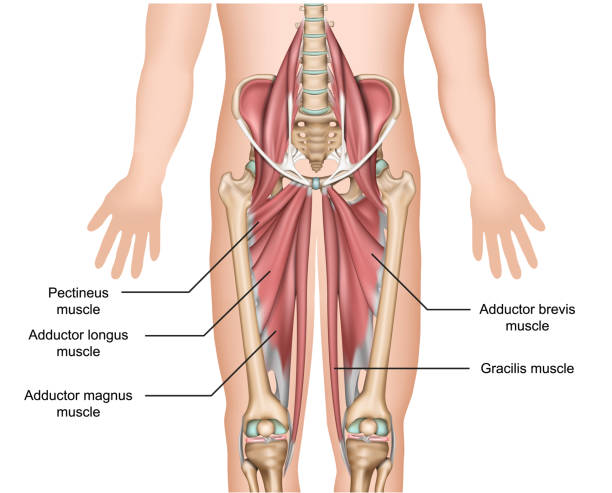
The adductor muscles consist of five primary muscles, each with a slightly different role in movement and stability.
Adductor longus
This muscle sits near the front of the inner thigh and is one of the most commonly used adductors. It originates from the pubic bone and inserts along the femur, helping bring the leg inward and stabilize the pelvis during walking and running.
Adductor brevis
Located deep to the adductor longus, this smaller muscle assists with hip adduction and plays a supporting role in hip flexion. It helps control subtle movements of the leg, especially during changes in direction.
Adductor magnus
The largest and most powerful of the adductor muscles, it has two distinct parts—one that assists with adduction and another that contributes to hip extension. Because of its size and dual function, it plays a major role in both strength and stability of the lower body.
Gracilis
This long, thin muscle runs down the inner thigh and crosses both the hip and knee joints. In addition to assisting with hip adduction, it helps flex the knee and contributes to overall leg coordination.
Pectineus
Positioned at the upper inner thigh, this muscle assists with both adduction and hip flexion. It also helps stabilize the front of the pelvis, especially during movements like walking or lifting the leg.
Primary Functions of the Adductor Muscles
The adductor muscles serve several important functions in daily movement and exercise.
- Hip adduction (pulling the leg inward toward the body).
- Pelvic stabilization, especially during single-leg movements like walking or lunging.
- Assisting hip flexion and extension.
- Supporting rotational control (helping guide proper leg tracking).
Strong adductor muscles are essential for maintaining balance, generating force, and preventing unnecessary strain on surrounding joints.
What Adductor Dysfunction Looks Like
When the adductor muscles are weak, tight, or imbalanced, it can lead to a variety of issues:
- Inner thigh strains or groin pulls
- Knee instability or discomfort
- Hip tightness or reduced mobility
- Poor squat or lunge mechanics (knees collapsing inward)
- Lower back or pelvic discomfort due to lack of stability
Dysfunction in the adductor muscles often shows up as compensations in other areas, especially the hips, knees, and lower back.
Best Home Exercises for Strengthening the Adductor Muscles
You don’t need a gym to effectively target the adductor muscles. These simple at-home exercises will help you build strength and improve stability.
Side-Lying Leg Lifts (Bottom Leg)
Lie on your side with your top leg bent and placed in front of your body. Keep your bottom leg straight and slowly lift it upward, then lower it back down with control. Focus on squeezing the inner thigh to engage the adductor muscles.
Isometric Ball Squeeze
Lie on your back with your knees bent and feet flat on the floor. Place a ball or pillow between your knees and gently squeeze inward, holding for 5–10 seconds before relaxing. This is a great way to activate the adductor muscles without movement.
Glute Bridge with Squeeze
Set up in a glute bridge position with a ball or pillow between your knees. As you lift your hips toward the ceiling, squeeze the object to engage the adductor muscles, then lower your hips slowly back down. Keep your core tight throughout.
Lateral Lunges (Bodyweight)
Stand tall and step one foot out to the side, bending that knee while keeping the opposite leg straight. Push your hips back and keep your chest up, then return to standing. You’ll feel a stretch and contraction through the adductor muscles of the straight leg.
Best Gym Exercises for Strengthening the Adductor Muscles
In a gym setting, you can progressively load the adductor muscles for greater strength gains.
Adductor machine
A direct and controlled way to isolate the adductor muscles.
Cable adductions
Great for functional strength and controlled movement.
Sumo squats
A wider stance increases emphasis on the inner thighs.
Lateral lunges with weight
Builds strength through a full range of motion.
Incorporating these exercises helps ensure the adductor muscles are strong enough to support more complex movements.
Conclusion
The adductor muscles are a foundational component of lower body strength, stability, and movement efficiency. While they may not always be the focus of training programs, their role in supporting the hips, knees, and pelvis makes them essential for both performance and injury prevention.
By understanding the function of the adductor muscles and consistently incorporating targeted exercises, you can improve balance, enhance strength, and move with greater confidence. Whether at home or in the gym, giving these muscles the attention they deserve will pay off in both the short and long term.